



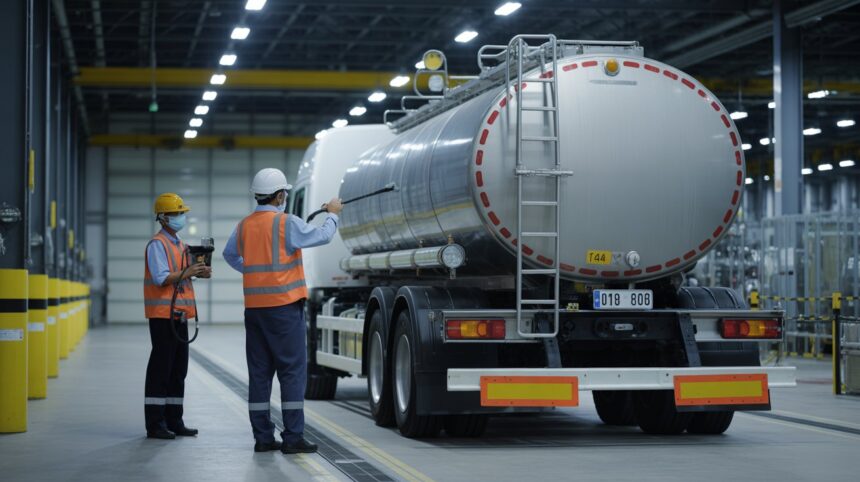
Some ordinary businesses rely on fuel tankers because fuel is delivered directly to where work happens, not bought ad hoc from public stations. In that kind of setup, fuel tanker inspection (referred to as ตรวจรถขนส่งน้ำมัน in Thai) gives managers a way to confirm that tankers supplying their sites remain mechanically sound and suitable for continued use.
The sections below move into the specific, practical reasons these checks become part of everyday operational control once fuel delivery is embedded in normal business activity.
Preventing Structural Failure and Fuel Loss
Problems usually show up during routine moments, not dramatic failures. A driver pauses longer than usual during loading. Someone notices a faint smell near a coupling. Those signs often point to thinning metal, worn seals, or floor stress inside the tanker.
When fuel feeds equipment tied to a pneumatic system in factories, even small losses or contamination can cause delays that feel hard to explain at first. Addressing structural wear early keeps fuel contained, avoids messy cleanups, and reduces the chance of a tanker being sidelined mid-schedule when it is needed most.
Maintaining Compliance with Recognised Safety Standards
Compliance tends to surface when someone asks for proof, not when work is going smoothly. An insurer requests records. A safety officer reviews procedures. That is when gaps become uncomfortable.
Professional checks support broader occupational safety management by creating clear, traceable records of condition and follow-up. These records fit into existing systems rather than adding noise.
For managers, it often feels easier to answer questions when documentation already reflects routine technical oversight instead of last-minute explanations pulled together under pressure.
Reducing Fire, Explosion, and Environmental Risk
Risk does not always announce itself. It builds quietly in pressure components, vents, or connection points that are rarely examined closely. A valve that sticks once and then works again can be easy to dismiss.
Professional assessments look deeper using specialised methods that do not rely on surface appearance. You might never notice an issue during normal rounds, yet catching it early reduces the chance of sudden release, ignition, or spills that disrupt work areas and draw unwanted attention from regulators.
Extending Tanker Service Life Through Data-Driven Maintenance
Maintenance decisions feel different when they are grounded in measured condition.
Thickness readings, wear patterns, deformation data, and other vital details give managers something solid to work with. They help make informed decisions on maintenance schedules and eliminate the guesswork on when repairs should happen. Other areas need attention sooner.
This approach often spreads spending more evenly and avoids retiring assets that still have a useful life. Over time, tankers stay in service longer because care is applied when it actually matters, not too early and not too late.
Supporting Reliable Operations and Delivery Planning
Reliability shows up in small ways. Fewer last-minute calls. When tanker readiness is known ahead of time, planning feels steadier and conversations become simpler. For businesses that depend on regular fuel movement, that predictability supports daily coordination and reduces the background stress that comes from wondering whether equipment will hold up when demand peaks.
Get in touch with NDT Thai for storage tank inspections and other engineering services in Thailand today.