



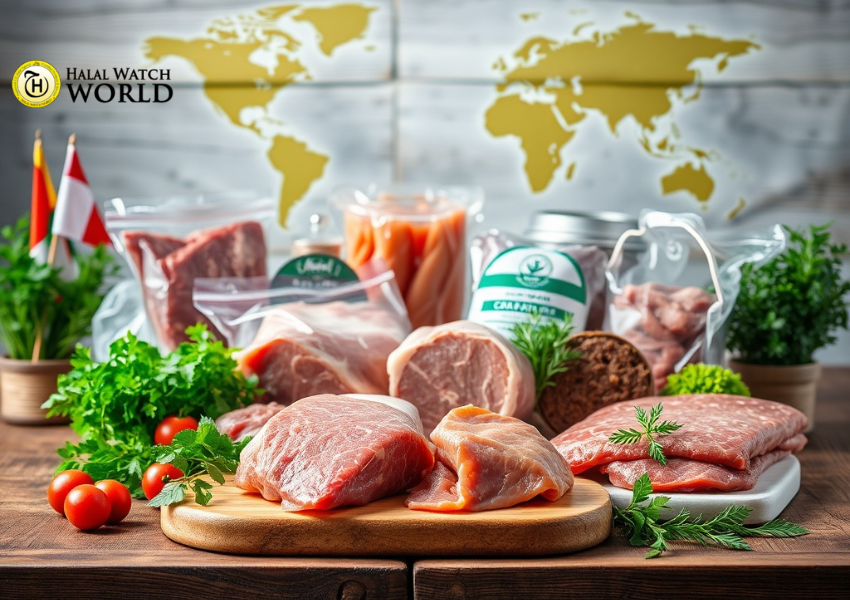
The American meat industry is renowned worldwide for its quality, scale, and technological advancements. However, for U.S. meat businesses looking to significantly expand their reach beyond domestic borders, a vital, non-negotiable step is essential: halal meat certification. This process is far more than a simple stamp of approval; it is a strategic business necessity that acts as the key to unlocking the immense potential of the global Islamic economy.
With a worldwide Muslim population exceeding 1.9 billion and a global Halal food market valued in the trillions, the demand for meat products that adhere to Islamic dietary laws (Halal) is skyrocketing. For U.S. producers, the decision to obtain this certification is a strategic pivot from merely catering to a domestic niche to competing aggressively on the world stage.
Why Halal Certification is the Gateway to Global Trade
Halal, an Arabic term meaning “permissible,” governs what Muslims can consume and use, particularly concerning food preparation and slaughter methods (Dhabīḥah). When a U.S. meat company pursues a halal meat certificate, it is formally proving its commitment to a comprehensive set of standards that encompass religious compliance, hygiene, ethical sourcing, and overall quality. This commitment directly translates into trust and market access.
1. Accessing Non-Negotiable International Markets
Many countries, particularly in the Middle East, Southeast Asia, and North Africa (MENA), have government-mandated import regulations that require official Halal certification from a recognized agency. Without this certification, a meat consignment—regardless of its quality—will be rejected at the border.
The certification process acts as a universal trade passport, ensuring products meet the stringent, non-negotiable import requirements of Muslim-majority nations like Saudi Arabia, the UAE, Indonesia, and Malaysia. For U.S. exporters of beef, poultry, and processed meat, obtaining this compliance is the single most critical factor for market entry and sustained growth. It ensures that your product is free from haram (forbidden) ingredients and processed according to Islamic jurisprudence.
2. Building Trust and Transparency with Global Buyers
In the B2B meat trade, particularly with international wholesalers, retailers, and food service chains, trust is paramount. A halal certification mark visible on packaging or trade documentation instantly signals integrity and rigorous oversight.
The certification process involves comprehensive audits of the entire supply chain, from the feed and health of the animals to the slaughter procedure, processing, storage, and logistics. This meticulous scrutiny covers:
- Source Integrity: Ensuring animals are raised and handled humanely.
- Slaughter Method: Verifying adherence to Dhabīḥah standards.
- Contamination Control: Preventing cross-contamination with non-Halal (Haram) products.
- Ingredient Review: Scrutinizing all added ingredients in halal certification services for processed meat export to ensure they are permissible.
This high level of transparency appeals not only to Muslim consumers but also to a growing segment of non-Muslim consumers globally who prioritize ethical, hygienic, and high-quality food.
The Dual Advantage: Ethical Standards and Market Differentiation
The rigorous nature of Halal standards provides a powerful competitive edge that transcends religious compliance, tapping into global trends for ethical and quality-focused consumption.
3. Aligning with Ethical Consumerism
Halal standards often overlap with broader ethical and quality concerns, making Halal-certified meat appealing to a wider audience. The principles often emphasize:
- Animal Welfare: Requiring animals to be healthy, well-cared for, and dispatched swiftly to minimize suffering, resonating strongly with modern ethical consumer demands.
- Hygiene and Sanitation: The certification protocols often enforce standards of cleanliness and food safety that exceed general industry norms, enhancing product quality.
By embracing Halal, U.S. companies can position their meat products not just as religiously permissible, but as a premium, ethically sourced option in international markets.
4. Capturing the Domestic U.S. Halal Market
While the global export market is lucrative, the domestic U.S. Muslim population is also a rapidly growing and significant consumer base. Halal certification allows U.S. producers to capture a greater share of this local market, which increasingly seeks out reliable, locally certified Halal products. Major U.S. retailers and food service companies are expanding their Halal offerings, and businesses with a verifiable halal certification label are best positioned to become preferred suppliers.
Navigating the Certification Landscape
The process of obtaining Halal certification involves partnering with a recognized halal certifying body. This typically involves an application, a review of ingredients and processes, a physical on-site audit by religious and food safety experts, and ultimately, the issuance of the official certificate.
Selecting the right partner is crucial for a U.S. exporter. The chosen halal certification services for meat export must possess international recognition and accreditation from the major import nations you plan to target. Since the requirements and accepted bodies can vary slightly between countries (e.g., Malaysia’s JAKIM, Indonesia’s BPJPH, or the UAE’s EIAC), selecting an internationally accredited organization is vital to avoid potential trade barriers.
In the U.S., several highly reputable organizations assist businesses in this process. American companies seeking the highest level of global acceptance often turn to a most trusted halal certification provider known for its rigorous standards and broad international recognition. These bodies not only issue the certification but also provide ongoing guidance on maintaining compliance with evolving global Halal standards. They ensure that all facets of a U.S. meat business—from the farm to the final package—uphold Shariah requirements.
For U.S. exporters aiming to understand the intricate regulatory landscape and find a globally accepted certification partner, organizations like Halal Watch World serve as essential resources. They provide intelligence on international Halal standards and act as a bridge connecting American producers with credible, internationally recognized certifying bodies.
Wrap Up
For the USA meat business to fully realize its potential on the global stage, especially in the fast-growing Muslim consumer markets of Asia, the Middle East, and Europe, halal meat certification is not a luxury—it is a mandatory investment. It is the definitive step that transforms a local American producer into a competitive and trusted global supplier, unlocking billions of dollars in new export revenue and establishing the brand as a leader in quality and ethical integrity.