


Most people think long term vision is about big goals. Retirement at a certain age. Owning a home. Building a business. Reaching financial stability. But long term vision does not live in the future. It quietly shapes what you do today. It influences whether you save or spend, whether you react emotionally or respond strategically, whether you delay gratification or give in to impulse. Even in moments of stress, when someone starts exploring options like debt relief to regain control, long term vision can determine whether that action becomes part of a thoughtful plan or just a temporary fix.
Vision is not just a dream. It is a filter.
The Invisible Framework Behind Every Decision
Every choice you make passes through some kind of internal framework. If that framework is unclear, decisions become reactive. You do what feels good now. You respond to pressure. You follow short term emotions.
Long term vision replaces reactivity with direction. It provides a standard against which daily choices are measured. When you know where you are heading, you evaluate actions differently.
For example, if your vision includes financial independence, a spontaneous purchase might prompt a pause. If your vision includes strong health in later years, daily exercise feels less optional.
The vision does not eliminate temptation. It reframes it.
Delayed Gratification as a Skill
Long term vision strengthens the ability to delay gratification. Research in psychology consistently shows that people who can postpone immediate rewards often experience better long term outcomes.
The American Psychological Association discusses how self control and future oriented thinking support goal achievement and resilience.
When you act with the future in mind, small daily sacrifices become meaningful investments. Saving a portion of income, choosing nutritious meals, dedicating time to skill development, these actions compound over time.
Without vision, those same actions feel restrictive. With vision, they feel purposeful.
Compounding Small Actions
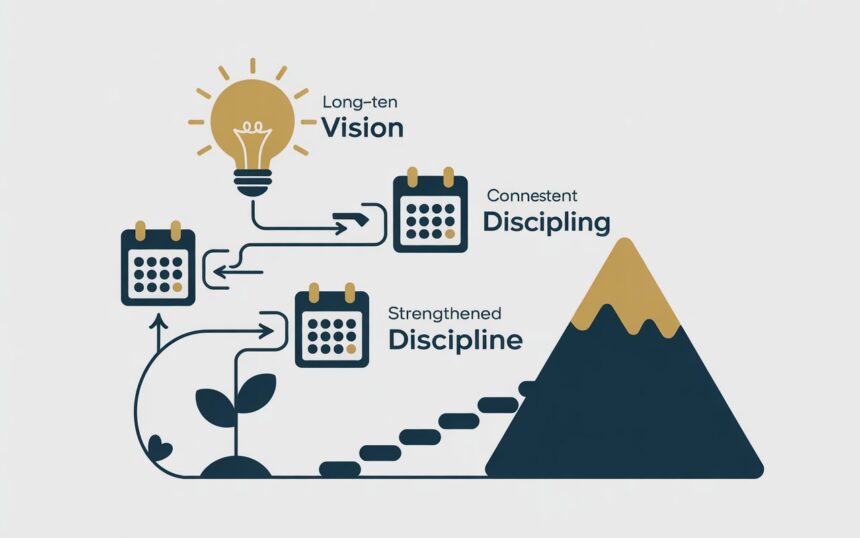
Long term vision works through compounding. Tiny, consistent behaviors accumulate into significant outcomes.
Consider financial habits. Investing modest amounts regularly builds wealth through compound growth. Consistent debt repayment reduces interest over time. Daily learning enhances career opportunities.
The U.S. Securities and Exchange Commission explains the power of compound growth in investing. The principle extends beyond money. Habits compound in health, relationships, and personal development.
Vision keeps you committed long enough for compounding to work.
Resilience During Setbacks
Life rarely moves in a straight line. Setbacks happen. Markets fluctuate. Careers stall. Plans change. Long term vision provides stability during those disruptions.
When short term outcomes disappoint, vision reminds you of the broader trajectory. Instead of abandoning goals after one obstacle, you adjust and continue.
Resilience grows when you see challenges as temporary deviations rather than permanent failures. Vision anchors perspective.
If your long term goal is financial stability, a temporary income dip does not define your future. It becomes a problem to solve, not a verdict on your worth.
Aligning Habits with Identity
Long term vision shapes identity. When you repeatedly act in alignment with a future goal, you begin to see yourself differently.
You become someone who saves consistently. Someone who exercises regularly. Someone who learns continuously. Identity strengthens behavior.
Without vision, habits feel forced. With vision, they reinforce who you are becoming.
This identity based approach reduces internal conflict. Choices align with a clear narrative about your future self.
Reducing Decision Fatigue
Daily life involves countless decisions. Without direction, each choice requires fresh evaluation. This leads to decision fatigue.
Long term vision simplifies the process. When you know your priorities, many options eliminate themselves. You do not debate every purchase or commitment. You measure them against your overarching goals.
This clarity conserves mental energy. It reduces stress and increases consistency.
Vision as Emotional Regulation
Long term thinking also helps regulate emotion. When faced with fear, excitement, or frustration, vision introduces perspective.
A market downturn may trigger anxiety. A career opportunity may create overconfidence. Vision balances those reactions by reconnecting you to strategy.
You ask, Does this align with my long term objectives? That question shifts focus from impulse to intention.
Over time, this habit strengthens emotional discipline.
Building Vision Intentionally
Long term vision does not appear automatically. It requires reflection. Define what you want in five, ten, or twenty years. Be specific about values, not just outcomes.
Write it down. Review it regularly. Adjust as circumstances change.
Then translate that vision into daily practices. What small actions today support that future? Saving ten percent of income. Reading twenty minutes per day. Reaching out to one meaningful contact per week.
Consistency transforms abstract vision into lived reality.
Long term vision is not about perfection. It is about alignment. It ensures that today’s choices serve tomorrow’s goals. It turns ordinary days into building blocks.
When vision guides your decisions, you stop drifting. You begin moving deliberately. And over time, those deliberate choices create a life shaped not by impulse, but by intention.