



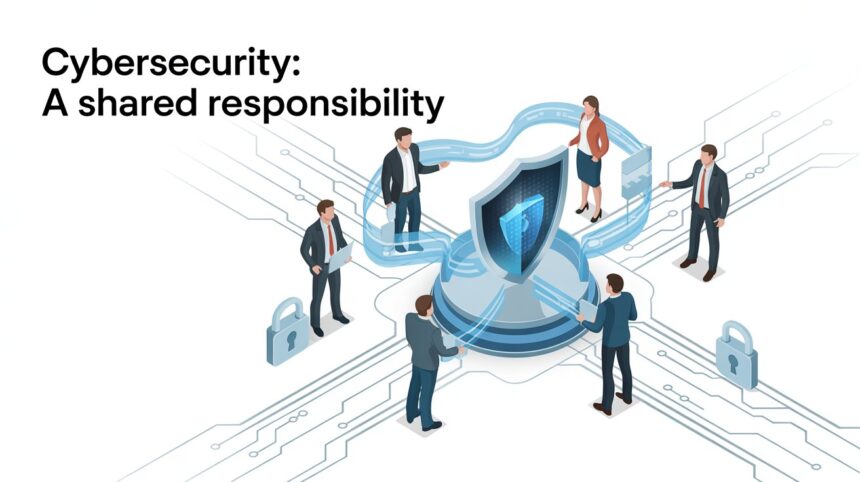
Not long ago, security was something that only the IT team worried about. Sensitive data, networks, and server rooms were kept behind locked doors and firewalls, and most people never thought about it. Today, security touches every part of work. Customer information, internal communication, financial records, and even brand reputation depend on systems that keep data safe. When those systems fail, the consequences are not just technical — they are strategic and often irreversible.
This reality has changed what it means to be a professional in any modern organization. Security can no longer be isolated in a single team or department. It must be understood broadly, and it must be practiced daily.
Security Isn’t Fear — It’s Visibility
One of the biggest misconceptions about cybersecurity is that it’s built around fear. Breaches. Threats. Hackers. While those headlines can be alarming, the core of good security practice isn’t about worrying — it’s about visibility.
Organizations must be able to see where their vulnerabilities are, how data moves through systems, and what risks might emerge when changes occur. Security isn’t just about installing tools; it’s about creating awareness and habits that reduce risk before it becomes a crisis.
Modern cybersecurity frameworks emphasize anticipation over reaction.
Security as a Business Priority
Boards and executives are increasingly aware that security problems don’t just affect tech teams — they affect customers, partners, and regulators. A breach can lead to lost revenue, legal penalties, loss of trust, and long-term reputational damage. In many industries, compliance with regulations is now a baseline requirement, not an optional extra.
Because of this, many professionals from diverse backgrounds — product, operations, HR, finance — are exploring structured learning in this space. They want to understand how threats emerge, how to assess risk, and how to build systems that are resilient rather than brittle.
A cybersecurity program isn’t just for specialists. It’s a bridge for people who operate systems to understand how those systems can fail and how to prevent that failure.
Cybersecurity Teaches a Discipline of Responsibility
Security isn’t a checklist. It’s a mindset. Training in this field arms professionals with a way of thinking rather than just a set of tools. It teaches how to evaluate context, anticipate misuse, and design processes that protect users, data, and infrastructure.
For example, a secure approach to access control isn’t just about passwords. It’s about understanding who needs access to what, why, and when. It’s about minimizing risk without creating unnecessary friction for legitimate users. It’s about thinking ahead rather than patching after the fact.
That kind of discipline improves decision-making at every level.
Why Learning Through Courses Still Matters
Cyber threats evolve quickly. New vulnerabilities appear, old vulnerabilities re-emerge, and attackers constantly adapt. Tools can help detect threats, but tools also need guiding principles. Humans who understand those principles are what make defenses meaningful.
A Cybersecurity Course introduces professionals to the patterns of attack and defense. It teaches not just the “what” of threats, but the “why” behind them. It covers areas like network security, access control, encryption basics, threat modelling, incident response, and risk assessment — not as abstract concepts, but as real decision points that influence business outcomes.
This kind of education enables professionals to spot issues that automated systems might miss. It equips them to ask the right questions when new technology is introduced. In this sense, security learning enhances judgment, not just technical skill.
Security as a Shared Responsibility
Just as everyone collaborates to serve customers or build products, everyone shares responsibility for protecting the systems they rely on. A poorly configured workflow, a weak password, or an unchecked integration can become the weakest link in a chain that connects a thousand users.
Security training helps people see those weak links before they become costly problems. It doesn’t make every professional a security expert. It makes them smarter users, better collaborators, and more thoughtful decision-makers.
Conclusion: Security Is Not Separate — It Is Embedded
In an interconnected world, security isn’t an add-on. It’s embedded in every feature, every data flow, and every business process. Organizations that excel are the ones that treat security as an enabler of trust, not as a burden of compliance.
Professionals who understand security thinking are more capable, more resilient, and more dependable. They don’t just protect systems. They preserve trust — and in today’s digital environment, trust is the most valuable asset of all.